
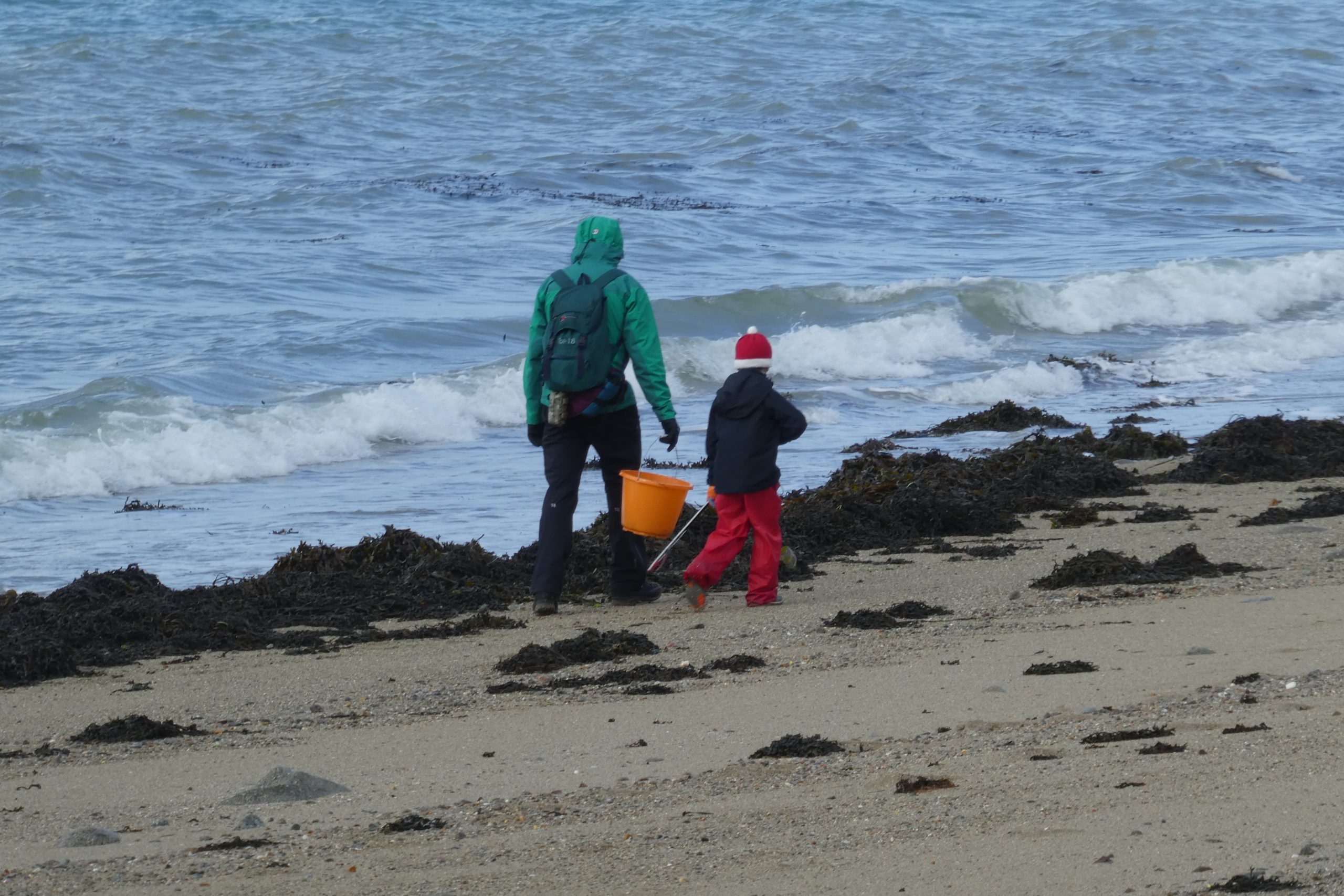
Whether you’re a seasoned wombler or heading down to the coast with a litter picker for the very first time, we’re thrilled you want to help keep Guernsey’s coastline clean. We’ve put together answers to the questions we get asked most often about Guernsey beach cleaning – from what kit to bring to what to do if you stumble across something unusual.
Got a question we haven’t covered? Feel free to get in touch with The Clean Earth Trust team and we’ll do our best to help!
Table of Contents
Planning Your Beach Clean
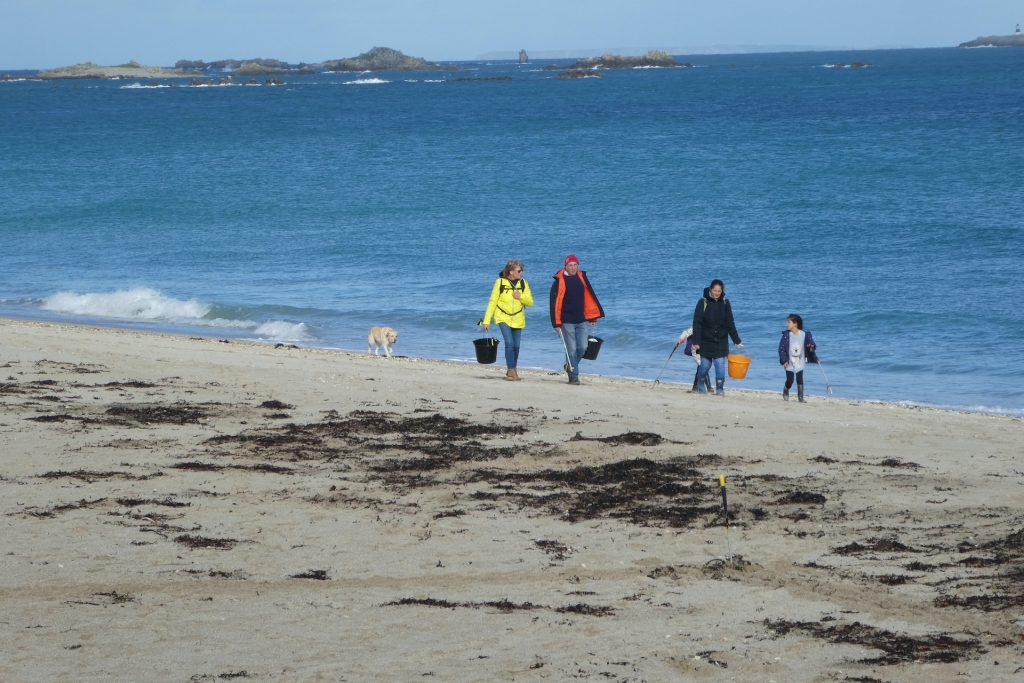
Where’s the best place to do a beach clean?
Every beach in Guernsey benefits from a clean, so whichever bay you choose, you’re making a real difference!
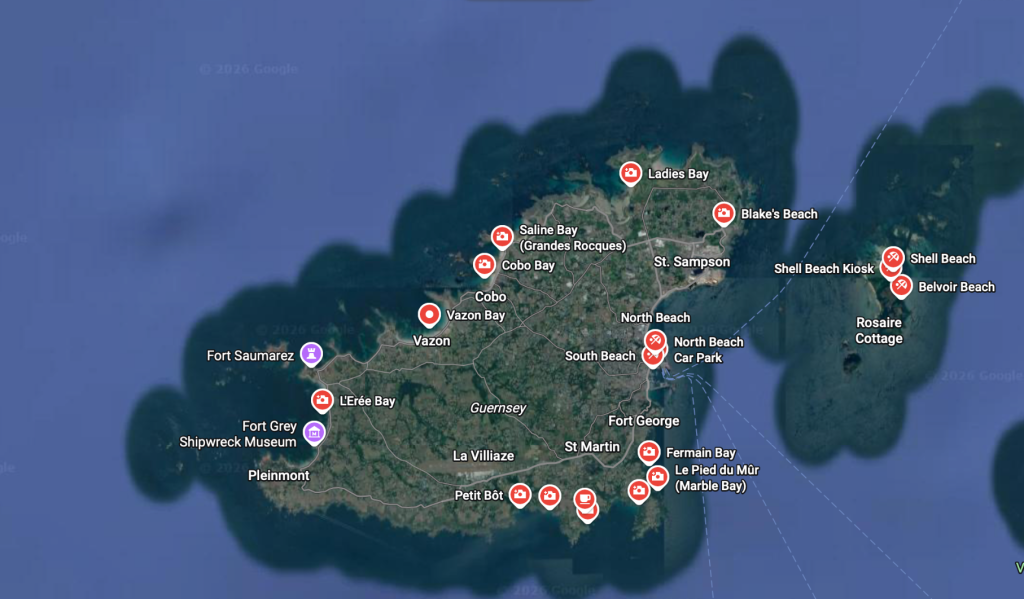
That said, some beaches naturally collect more litter than others due to prevailing winds, tidal ranges, currents, and rock formations. Popular spots with great facilities—like Pembroke, L’Ancresse, and Grandes Rocques—also tend to get a lot of love from volunteers. Before heading out, take a look at The Clean Earth Trust Events Calendar to see where we’ve been recently, and if you can, pick a quieter bay that hasn’t had as much attention.
Don’t forget that inland litter picking counts too! Parks, car parks, lanes, and school playgrounds all collect rubbish that eventually washes into storm drains and straight out into our oceans.
Which beaches are most accessible?
Not every bay is easy to get onto, especially if you’re bringing children, a group, or have mobility requirements. Check Google Maps or your Perry’s Guide before setting off to make sure the access points suit everyone in your group.
- Easy access & facilities: Most west and north coast bays (like Vazon, Cobo, Port Soif, and Pembroke) have nearby parking, kiosks, and toilets. Several coastal kiosks also participate in local litter-picker lending schemes, and some even reward womblers with a free cuppa or ice cream!
- Trickier terrain: Many of our stunning south coast bays are only accessible via steep cliff paths and steps, making them unsuitable for some volunteers. These include Petit Bot, Moulin Huet, Portelet, Jaonnet, La Bette, Telegraph Bay, and Marble Bay (and please note that Divette remains out of bounds).
When’s the best time to do a beach clean?
You’ll spot different types of marine litter depending on the season and weather:
- Autumn & Winter: Big spring tides and winter storms churn up the seabed and push older, oceanic debris onto the shore.
- Spring & Summer: Sunny days bring more beachgoers, meaning you’re more likely to find fresh picnic, takeaway, and drinks packaging.
- After strong winds: Always check which way the wind has been blowing—onshore gales tend to push floating litter directly onto windward bays.
Safety first: Always check the local tide times before you head down. Never attempt a beach clean on a rising tide in bays where you could get cut off.
What do I need to do a beach clean?
All you really need is a sturdy pair of gloves, something to put the rubbish in, and a bit of enthusiasm! If you’re heading out solo or with friends, we recommend packing:
- Waterproof gardening or work gloves (to protect against sharp shells, glass, and rusty metal)
- Sturdy footwear, waterproof boots, or wellies
- A reusable bag or bucket (an old rinsed-out paint tub makes a brilliant, durable carrier that won’t tear)
- A litter picker (a lifesaver for your back and great for reaching into rocky crevices)
- Hand sanitiser (keep it in the car or your bag for afterwards)
- A reusable cup or thermos (essential for a warm drink on brisk Guernsey mornings!)
Before you go, read through our step-by-step guide on How to Conduct a Beach Clean for safety tips and advice. (Joining one of our organised public cleans? Don’t worry about kit—we provide all the equipment you need!)
Spotting & Understanding Marine Litter
Where will I find the most litter on the beach?
Head straight for the high tide mark—the line of dried seaweed and natural debris left behind as the tide drops—as well as any shingle or pebble banks at the top of the beach. Small fragments of plastic get tangled up in the wrack line or blown across the sand until they wedge between rocks and pebbles.
What should I expect to find?
At first glance, a Guernsey beach can look spotless. Look a little closer! While you might spot larger items like plastic bottles, cans, or tangled fishing rope, most marine litter has been battered by waves and sunlight into tiny pieces.
If you gently sift through the seaweed and peer between rocks, you’ll start spotting bottle caps, sweet wrappers, short offcuts of fishing line, polystyrene beads, cotton bud sticks, and nurdles. To help identify tricky items, check out our Marine Litter Reference Guide.
What’s a microplastic?
Microplastics are any pieces of plastic measuring less than 5mm across. Even though they’re tiny, they take centuries to degrade and are easily mistaken for plankton or fish eggs by marine wildlife. They fall into two categories:
- Primary microplastics: Plastics manufactured to be microscopic from the start, such as cosmetic microbeads or industrial resin pellets.
- Secondary microplastics: Tiny fragments created when larger items—like plastic bags, bottles, or synthetic fishing nets—break down in the sun and surf.
What’s a nurdle?
A nurdle is a small plastic pellet (usually 1–5mm in diameter) used as the raw building block in plastic manufacturing.Factories melt them down to make everything from water bottles to car parts. Unfortunately, billions are spilled into rivers and oceans globally during transport every year, washing up on beaches worldwide—including ours—where seabirds and fish often mistake them for food.
Should we pick up cigarette ends?
Yes, definitely! Cigarette butts are one of the most commonly littered items on Guernsey’s beaches—our volunteers logged over 7,100 of them in 2025 alone.
Many people assume filters are made of paper and cotton, but they’re actually made of cellulose acetate—a type of plastic. When dropped on the beach or flicked down a drain, they take up to 15 years to break down into microplastics while leaching toxic chemicals into our coastal waters. Keep a separate jam jar or small tin in your kit for butts so you can dispose of them safely.

Tracking Data & Our Impact
How much litter is found in Guernsey?
Collectively, Guernsey’s beach cleaners make a huge impact. According to The Clean Earth Trust’s Marine Litter Reports, volunteers collected and logged 30,156 items of marine litter across 25 Guernsey locations in 2025 alone—averaging over 1,000 items per mile of coastline!
Even if you only fill half a bucket on an afternoon walk, every single piece removed prevents harm to local wildlife.
Is anyone recording what is found on the beaches?
Yes! Citizen science is at the heart of what we do. Every item collected at our public and corporate cleans is sorted, counted, and logged to produce Guernsey’s annual Marine Litter Report, which helps track trends and push for real policy and packaging changes locally.
If you do a solo clean or head out with friends, we’d love you to record what you find! You can submit your tally online using our Log a Beach Clean Form or grab our Printable Beach Clean Survey Form to take down to the beach with you.
Disposal, Safety & Unusual Finds
What do I do with the litter I collect?
- Small amounts: If you’ve only gathered a handful of items, pop them into a public coastal bin (or take them home for your blue or clear kerbside bags if clean and dry).
- Larger hauls (Become a Registered Wombler): If you clean regularly and collect full sacks of rubbish, register with the States of Guernsey Wombling Scheme by emailing recycle@gov.gg or calling Guernsey Waste on 01481 221234. Registered Womblers receive identifiable sacks that can be left neatly beside public coastal bins for collection. (Please use these bags strictly for wombling litter, as each roll is tracked to your registration).
What if I find something too heavy to move?
Don’t risk your back trying to haul heavy ropes, tyres, or washed-up drums off the beach! Note the location (using What3Words if you have it) and call Agriculture, Countryside and Land Management Services (ACLMS) on 01481 234567 or email aclms@gov.gg so their team can arrange safe recovery.
What if I find something dangerous?
Never pick up anything sharp, leaking, or hazardous—even if you are wearing thick gloves. If you come across needles/clinical waste, chemical containers, flares, or unexploded ordnance:
- Clinical waste, chemicals, or hazardous debris: Leave it in place and report it to ACLMS on 01481 234567 (or Guernsey Waste on 01481 221234).
- Suspected flares, munitions, or emergency hazards: Keep well clear and call Guernsey Police / Coastguard on 999 immediately.
What if I find an injured or dead animal?
- Injured wildlife or marine mammals (such as seals): Call the GSPCA 24/7 emergency line on 01481 257261.
- Dead marine animals, seabirds, or washed-up livestock: Please report the location to the States Veterinary Officer on 01481 221161 (or via ACLMS on 01481 234567) so it can be safely recorded and removed—especially important during avian flu monitoring periods.
What if I find something really interesting?
Guernsey’s tides wash up all sorts of fascinating treasures—from mermaid’s purses (shark and ray egg cases) and sea glass to vintage bottles and driftwood. Snap a photo and share your discovery on the Found on the Beach in Guernsey Facebook Group or tag us on social media! If you suspect you’ve found something of historical or ecological significance, you can also reach out to La Société Guernesiaise or Guernsey Museums.
What if I find something valuable?
If you find lost jewellery, keys, a phone, or anything that clearly belongs to someone, please hand it in to the Guernsey Police Station Enquiry Office on Hospital Lane (open Monday to Friday—or call the non-emergency line on 01481 222222 for advice). Under local lost property procedures, if an item remains unclaimed after the statutory holding period, you may be eligible to claim it.
Handy Beach Clean Safety & Contact Sheet (Free Download)
Heading down to the coast for a solo clean or organising a group session? Grab a copy of our one-page Guernsey Beach Cleaning: Safety & Contact Sheet before you head out!
Designed to be saved straight to your phone or printed out and kept in your beach clean kit, it puts everything you need in one place:
- Essential Guernsey Contacts: Quick-dial numbers for ACLMS, Guernsey Waste, the GSPCA, the States Vet, and emergency services—so you always know who to call about heavy debris, hazardous waste, or injured wildlife.
- Safety & Kit Checklist: Reminders on tide safety, protective gear, and how to handle tricky or sharp finds.
- Disposal & Data Logging: Instructions for Registered Wombler bags and a direct link to submit your finds to our annual Marine Litter Report.
Download the Guernsey Beach Cleaning Safety & Contact Sheet (PDF)
Get Involved & Stay Connected
How can I stay up to date with upcoming beach cleans?
We’d love to see you on the sand! You can keep up with all our upcoming public cleans, Wellbeing Beach Cleans, and local environmental news through:
- Our Events Page: cleanearthtrust.org/events
- Facebook: The Clean Earth Trust on Facebook
- Instagram: @cleanearthtrust
- Local Community Groups: Check out Found on the Beach in Guernsey for daily beachcombing finds and community litter-picking updates.
Can someone come and speak to my school, club, or business?
Yes! We love chatting with schools, youth groups, and local businesses about marine plastics, biodiversity, and how we can all reduce our environmental footprint. We also run bespoke Corporate Beach Cleans for local teams. Because we’re a small charity team, our diary fills up quickly—drop us a message via our Contact Page and we’ll do our best to arrange a session.
Can I do beach cleaning for my Duke of Edinburgh (DofE) Award?
Yes! In Guernsey, you can complete the Volunteering section of your Duke of Edinburgh Award through beach cleaning with The Clean Earth Trust. The general commitment is to beach clean once a week for at least one hour across your allocated DofE timeframe—typically 3 months for Bronze, 6 months for Silver, and 1 year for Gold.
To get started and check current availability for Guernsey participants, visit The Clean Earth Trust Duke of Edinburgh Page and fill out the DofE enquiry form.
Where can I find out more about recycling and local biodiversity?
- Waste & Recycling: Contact the Guernsey Waste team at recycle@gov.gg, call 01481 221234, or visit gov.gg/recycling. For commercial or specialist recycling enquiries, you can also contact the Guernsey Recycling Group (GRG) on 01481 247786.
- Local Nature & Biodiversity: Explore The Clean Earth Trust, visit La Société Guernesiaise, or check out the Guernsey Nature Commission for local conservation projects and educational resources.
Useful Links
- Submit Your Finds (Beach Clean Survey Form): Log Your Beach Clean Data on Jotform
- Corporate Cleans: Explore The Clean Earth Trust Corporate Programme
- Duke of Edinburgh (DofE): The Clean Earth Trust DofE Volunteering Page
- Beach Clean Guide: The Beach Clean Project Hub
- Upcoming Events: The Clean Earth Trust Beach Clean Events Calendar
Updated November 2026.