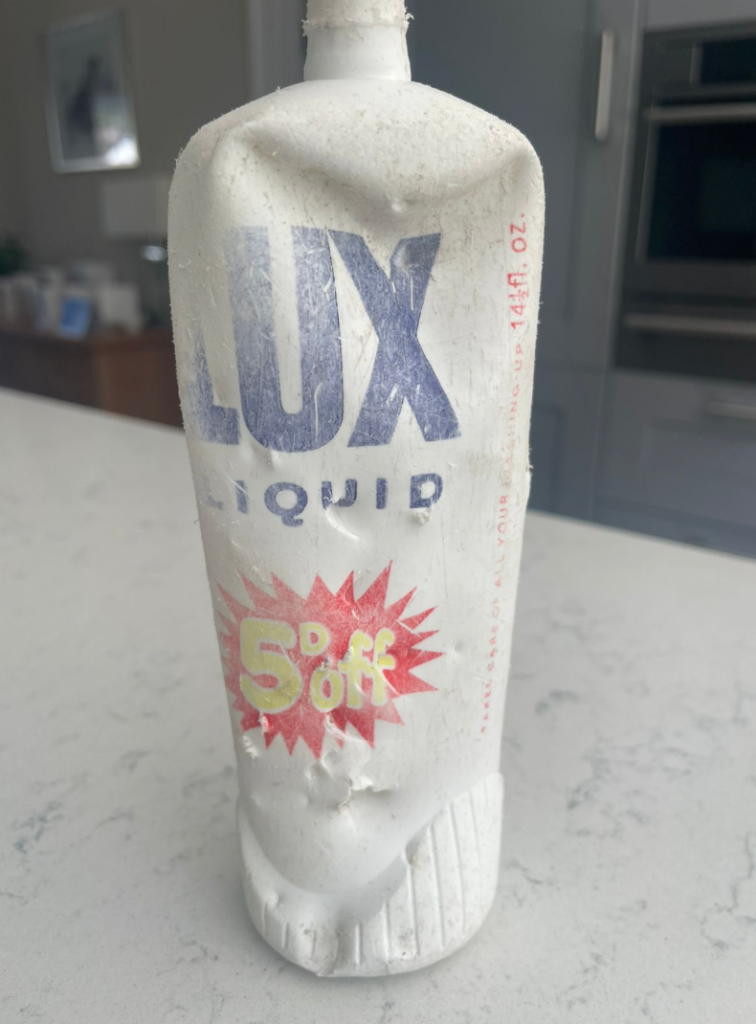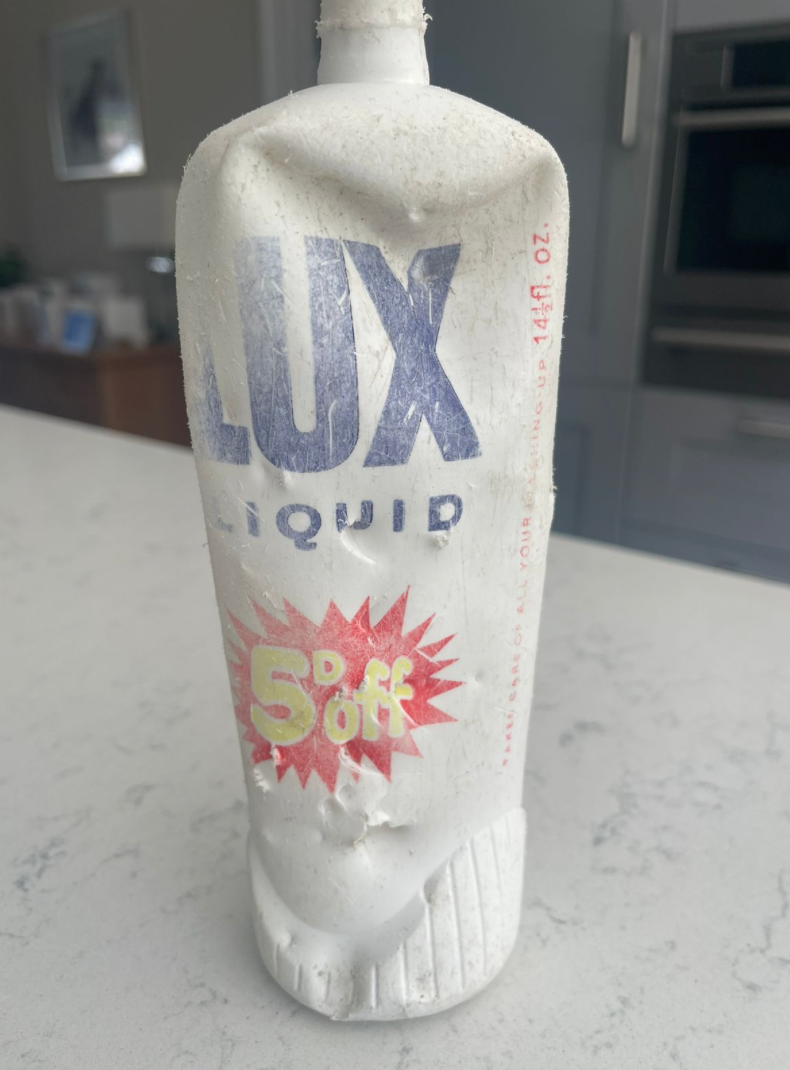
This interesting Lux Liquid bottle was found in a rock pool at L’Eree in April 2026. It was apparent that it had been around for a long time as it boasted a price reduction of 5d and a capacity of 14 ½ fluid ounces. These are references to pre-decimal currency and capacity measurements in use before February 1971, when decimalisation took effect. So, this bottle is at least 55 years old.
Many beach combers today are not old enough to know what Lux Liquid was. The wording on the side of the bottle reveals that it “takes care of all your washing up” and there is also a quaint assurance that the product is “Lever qualityand performance guaranteed or your money back”.
The bottle is not marked to show what material it is composed of. It was only in 1988 that the Society of the Plastics Industry introduced the Resin Identification Code (RIC) shown in the table below.
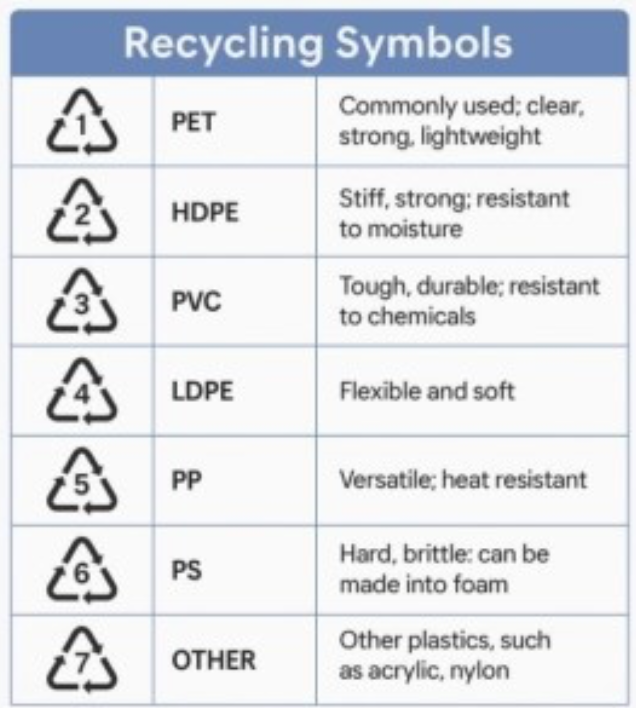
Although most plastics are recyclable, it is only RIC codes 1- PET and 2- HDPE that are collected curb side in Guernsey. PET is the light clear plastic used extensively for water and other drinks bottles and in food trays. HDPE is used in more rigid and non-transparent bottles such as bleach products.
Other plastics such as LDPE, which is used widely in bags for food items, often labelled as being recyclable through supermarkets, may be recycled at the Longue Hougue Household Waste and Recycling Centre.
It is likely that the Lux liquid bottle is made of HDPE (High Density Polyethylene). This material began to be used for producing plastic bottles to contain detergents in the late 1950’s. So, it is possible this bottle is more than 66 years old.
HDPE is a widely used plastic known for its durability and versatility and has become a staple in various industries. While HDPE offers numerous benefits, such as being lightweight and resistant to chemicals, its environmental impact has sparked significant debate. The production of HDPE relies on fossil fuels, contributing to greenhouse gas emissions and resource depletion. Additionally, its non-biodegradable nature means that discarded HDPE products can persist in the environment for centuries, leading to pollution in landfills, oceans, and ecosystems.
This Lux Liquid bottle is a striking example of just how persistent HDPE products can be. In the time in has been in the environment, which probably lies between 55 and 66 years, it has become holed in places and bent a little out of shape, but it remains more or less intact. It has lasted more than half a century and looks like it would have easily survived intact more than a century if left in the environment. In fact, even after breaking up, its materials would continue to exist in the form of micro plastics and nano plastics, which are likely to be ingested by marine animals and get into the food chain and ultimately be ingested by humans with potential health implications, which are the subject of current scientific study. This bottle illustrates the need to prevent the accumulation of plastics in our oceans by properly recycling plastics of all kinds and recovering them from the environment wherever possible, which is one of the central aims of our beach cleaning program.